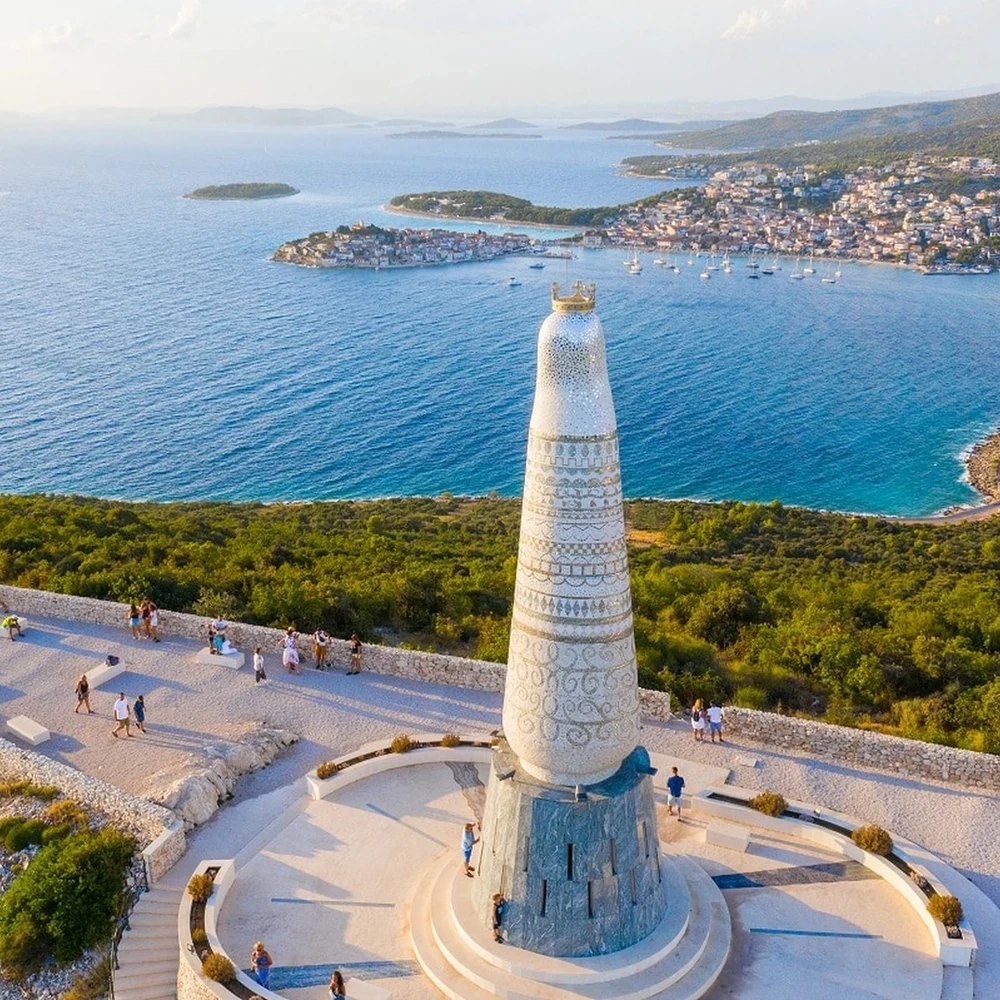
At first glance, Primošten looks like the perfect Dalmatian postcard: stone houses, narrow streets, vineyards, and an endless blue sea. But above it all, on the hill of Gaj, stands a watchful presence: Our Lady of Loreto.
Her place above the town is no coincidence. It is deeply connected to local history, faith, and the everyday life of a community that has always lived close to the sea. For many people in Primošten, she is far more than a landmark. She is a symbol of protection, hope, and belonging.
Who Is Our Lady of Loreto?
Our Lady of Loreto is linked to the famous tradition of the Holy House, believed to be the home of the Virgin Mary from Nazareth.
- According to Christian tradition, the Holy House was miraculously transported from Nazareth to Loreto in the 13th century
- Loreto became one of the most important Marian pilgrimage sites in Europe
- Our Lady of Loreto became especially revered by travellers, sailors, and pilgrims
Because of this journey, she came to be seen as a heavenly protector of all who travel — especially those whose lives depend on the sea.
A Protector for a Town Shaped by the Sea
For Primošten, the choice of protector was never something abstract. Life here was built around fishing, seafaring, and constant contact with the Adriatic.
- Generations of local families lived from the sea
- Storms, uncertain crossings, and maritime dangers were part of everyday reality
- Faith offered comfort before departure and gratitude after a safe return
In that setting, Our Lady of Loreto became a natural spiritual guardian — someone to turn to in moments of fear, uncertainty, and hope.
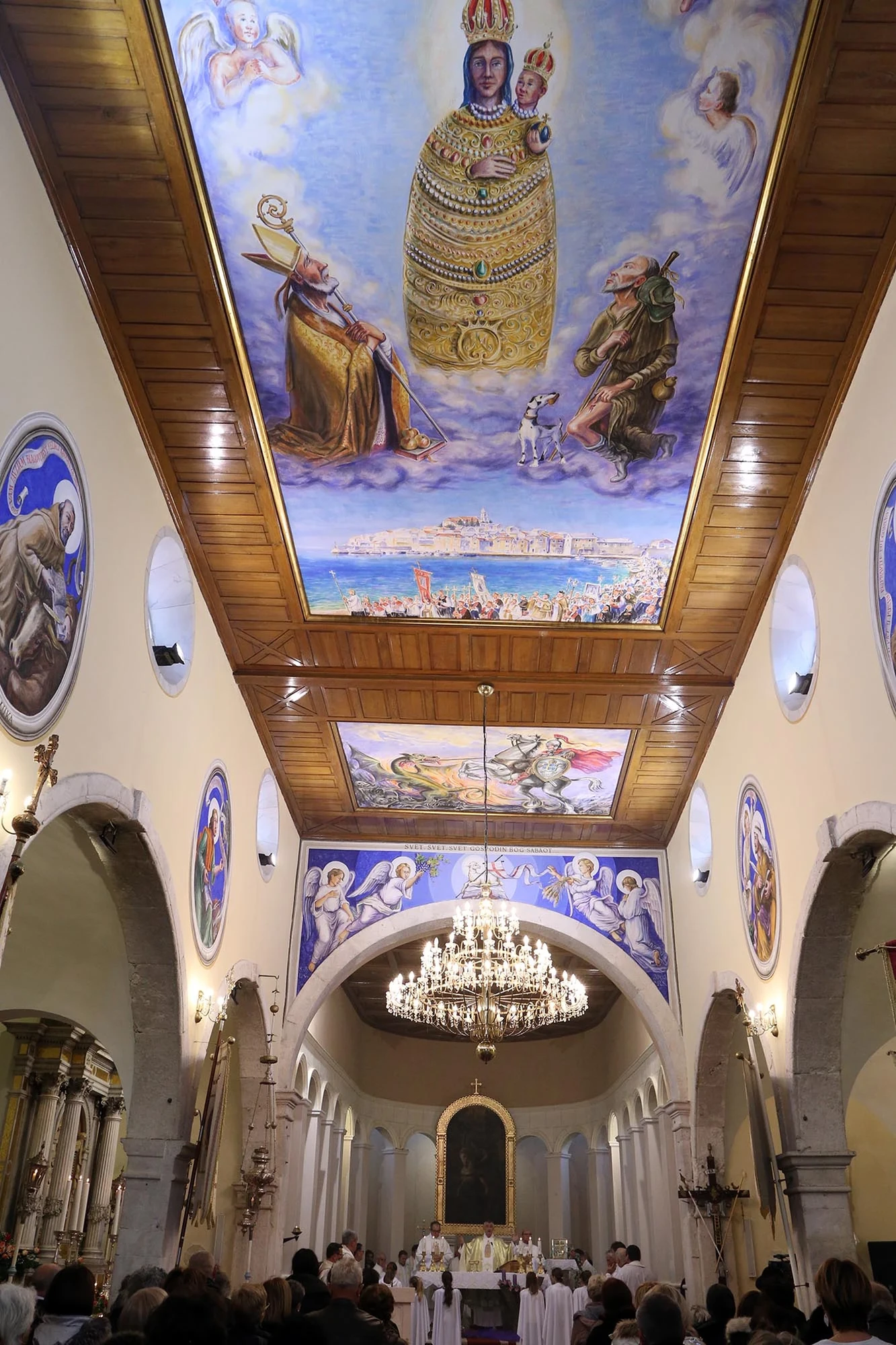
How the Devotion Reached Primošten
The devotion to Our Lady of Loreto spread across Dalmatia through centuries of coastal exchange, especially because of strong maritime ties with Italy.
- Trade routes carried not only goods, but also stories, customs, and beliefs
- Sailors helped bring the Loreto tradition to Adriatic communities
- The people of Primošten embraced this devotion as part of their own identity
That is why her meaning in Primošten feels both universal and deeply local: she connects Mediterranean faith, seafaring culture, and the emotional life of the town.
The Statue Above Primošten
Today, one of the most striking symbols of Primošten is the monumental statue of Our Lady of Loreto on Gaj hill.
- It is approximately 17 metres tall
- It can be seen from far away — even from the sea
- It has become both a spiritual landmark and a defining symbol of the town
Many visitors compare its visual impact to other famous hilltop monuments, but in Primošten it feels more intimate, more local, and deeply woven into the landscape.
Celebration, Faith, and Community
Although the official feast day of Our Lady of Loreto is December 10, Primošten celebrates her most prominently on the second Sunday of May.
- Processions and open-air masses are held near the statue
- Locals and visitors gather in large numbers
- The whole town takes on a strong sense of unity and shared emotion
In spring, with the Adriatic calm and the landscape in bloom, the celebration becomes more than a religious observance. It becomes a living tradition that expresses the heart of Primošten.
More Than a Monument
For the people of Primošten, Our Lady of Loreto is not simply a statue on a hill.
She is:
- a guardian of sailors
- a source of hope in uncertain times
- a lasting part of local identity
Whether you see her glowing above the town at sunset or visit in silence and reflection, her presence feels personal. She reminds visitors that Primošten is not only a beautiful place on the Adriatic — it is also a place of memory, faith, and meaning.