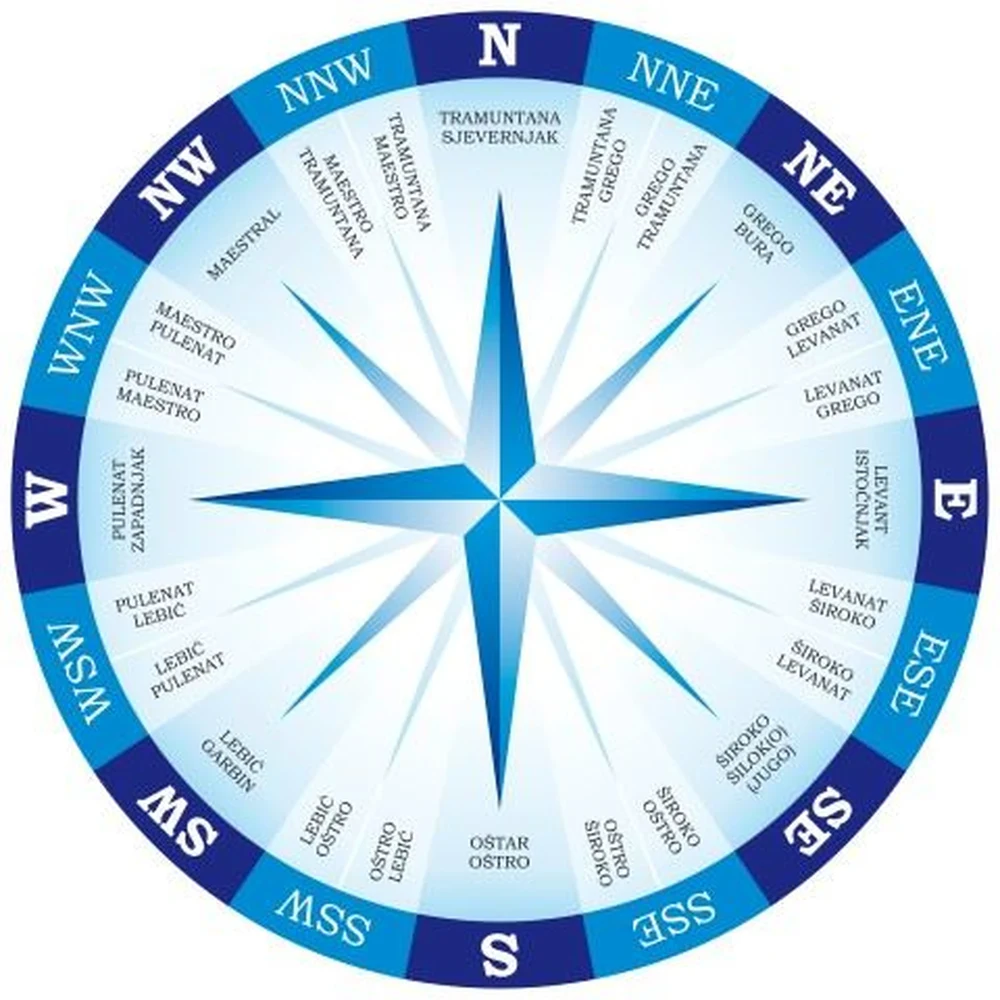
The Adriatic Sea is never silent. Even on the calmest days, the wind is speaking—moving over stone villages, folding into pine forests, and brushing the sea like a restless memory.
Locals do not simply say “it’s windy.” They ask: which wind? Here, wind is more than weather. It is character. The sea has many moods, and generations of fishermen, sailors, shepherds and stonecutters learned the same lesson: you do not fight the wind—you read it.
Bura – the wind that breaks everything but lies
The Bura is the best-known Adriatic wind: cold, dry and fast. It falls from the mountains like a decision that cannot be reversed. One moment the sea is calm, the next it is full of white teeth.
Old coastal stories say the Bura is not born—it is released. Mountain spirits open invisible gates when they grow impatient, and the wind escapes like a herd of wild horses. Fishermen used to say: “When the Bura arrives, even the sea stands up straight.”
Jugo – the wind that remembers sadness
The Jugo comes slowly. It rises from the south, warm and heavy, carrying moisture and a strange emotional weight. People often say Jugo changes moods before it changes weather.
In Dalmatian folklore, Jugo is called “the wind that has traveled too far.” It is believed to gather fragments of distant storms, lost ships and unspoken grief from other seas. An old legend tells of a fisherman who would never go to sea during Jugo. He said: “It is not wind. It is memory returning home.”
Maestral – the friendly wind of summer
The Maestral is the gentle summer wind that arrives like relief. It begins quietly in the morning heat and strengthens in the afternoon, cooling the coast and filling sails like a promise.
Locals say Maestral is the only wind that “knows how to behave.” It does not demand—it offers. There is even a light-hearted legend that it is the wind of young sailors in love, forever returning to cool the sun so people can stay outside longer, talk longer and fall in love more easily.
Tramontana – the silent cleaner of skies
The Tramontana is a northern wind, sharp and brief. It does not linger. It arrives, clears the sky and leaves everything more visible than before.
Old fishermen believed Tramontana was the “wind of honesty.” After it passes, nothing can hide—not boats, not clouds, not lies. One story says monks in coastal monasteries used to open every window when Tramontana came, believing it carried divine clarity through the stone walls.
How to read the Adriatic better
- Bura: cold, dry, sudden and strong
- Jugo: warm, humid, slower and emotionally “heavy”
- Maestral: summer-friendly, refreshing afternoon wind
- Tramontana: short northern wind that clears the sky
To live on the Adriatic is to learn a simple skill: not to predict the wind perfectly, but to recognize it. Every wind tells a story, and if you listen carefully enough, you realize the sea is not moving randomly at all. It is answering.